Launch offer — valid today only

📄 Digital book in PDF · read it on your phone or print it

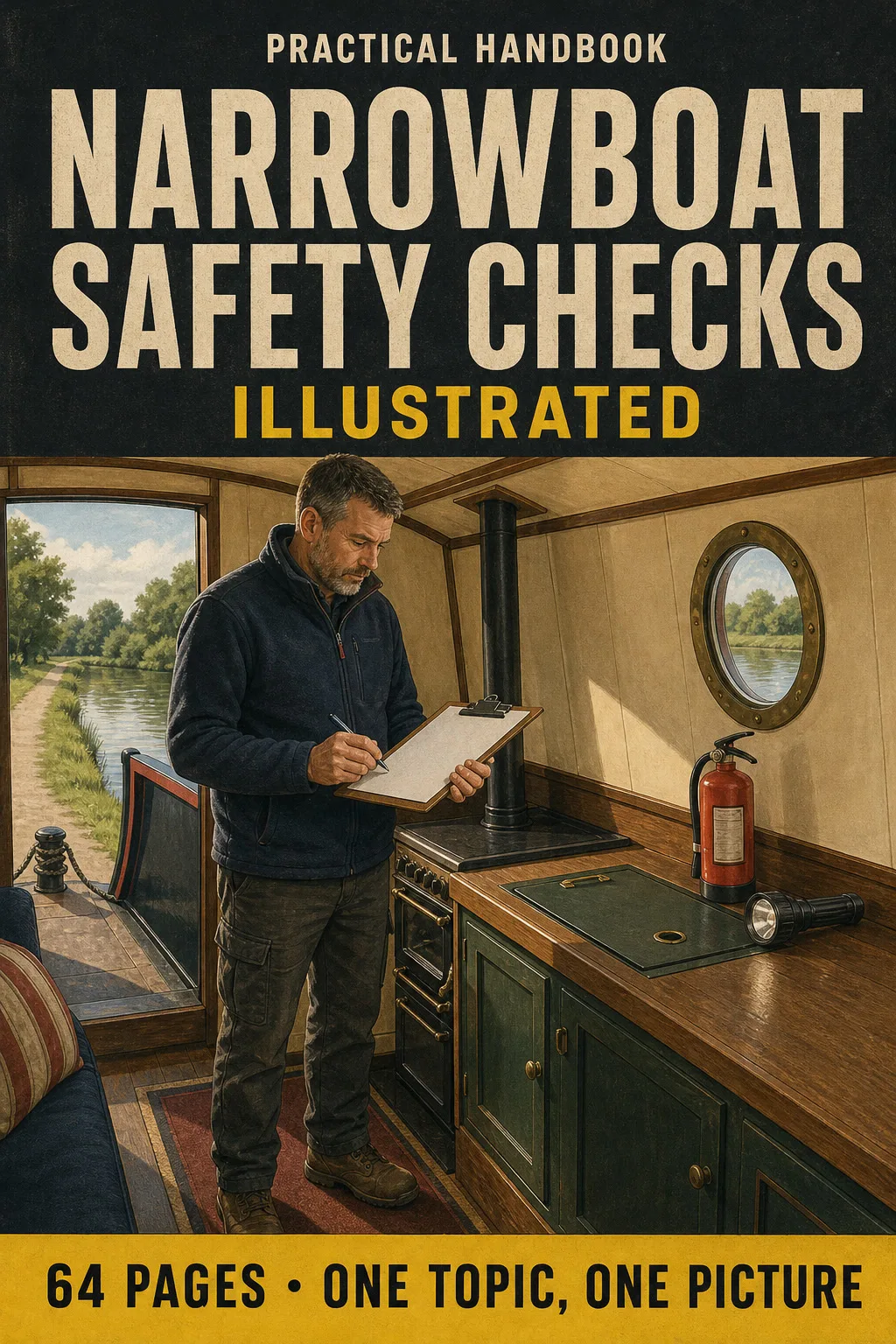
The Narrowboat Safety Check, Bow to Stern, in Drawings One Check on Every Page

Fuel filler, tank vent, batteries, shore power, gas locker, fixed vents, CO alarms, extinguishers and escape routes. Every topic has its own page: the drawing first, then what you need to remember. 64 illustrated pages.

START CHECKING YOUR BOAT THIS WAY

🔒 Secure checkout · PDF by email · 30-day guarantee

Every topic, its own pageEvery check drawn on the boat, with the explanation beside it
64 illustrated pages8 parts, from what the safety check is for to the one-page boat map
Up-to-date sourcesCurrent Boat Safety Scheme requirements and checking procedures
PDF by emailFormat

Look Inside the Book

Every page has one big drawing and a box with the checks and numbers you need to know:

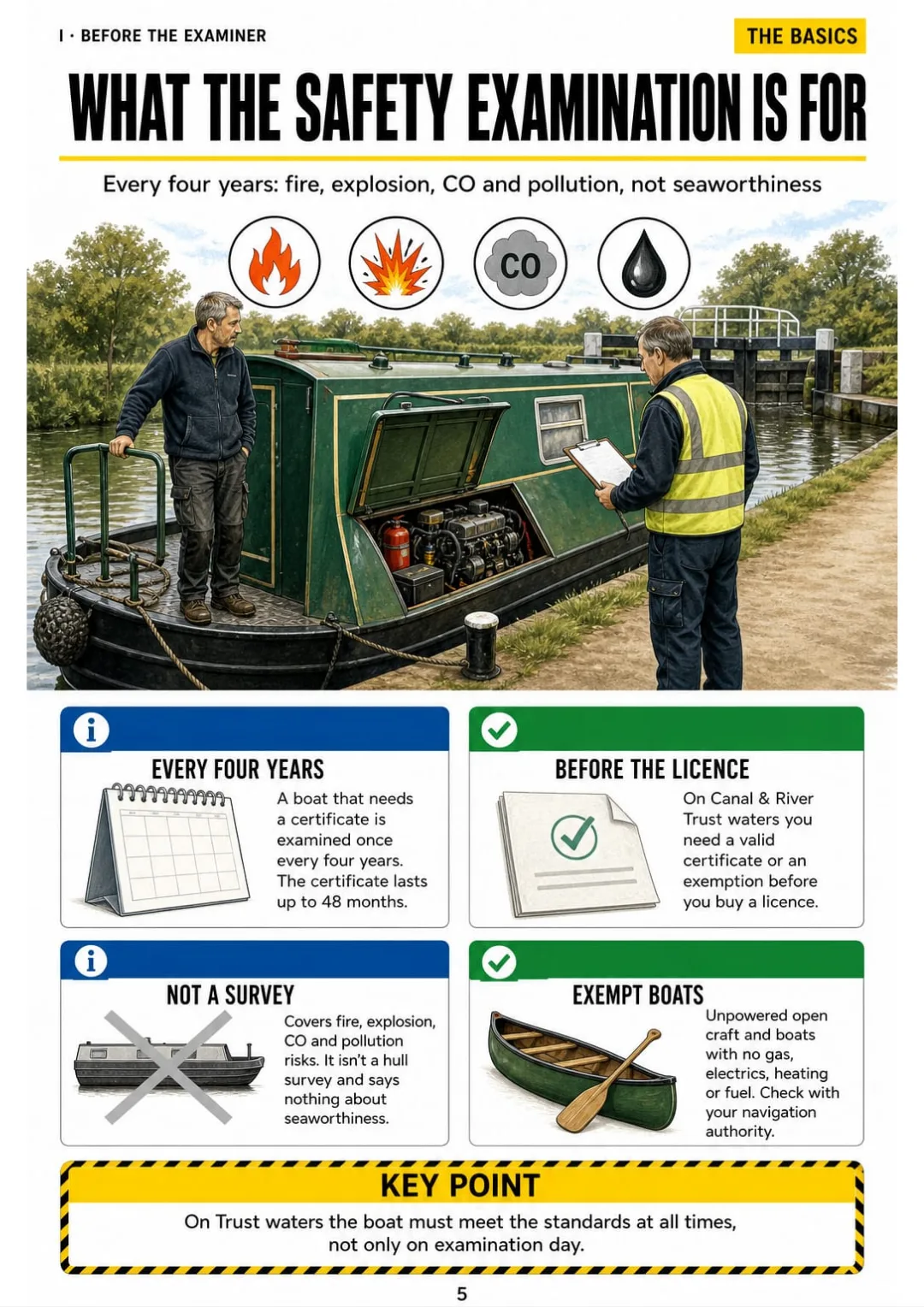
Every four years, certificate valid up to 48 months: fire, explosion, CO and pollution.
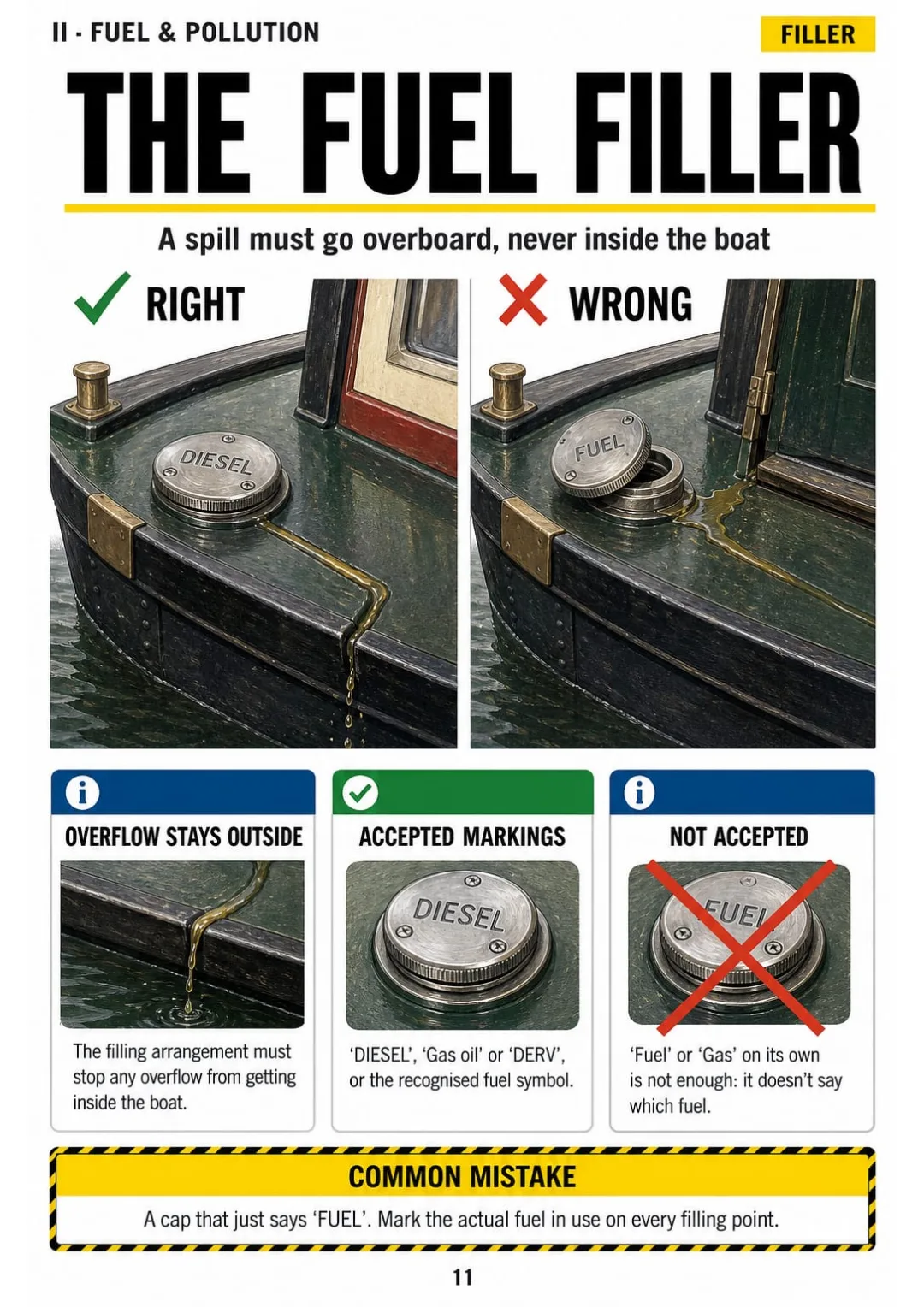
'DIESEL', 'Gas oil' or 'DERV' on the filler: 'Fuel' alone isn't accepted.
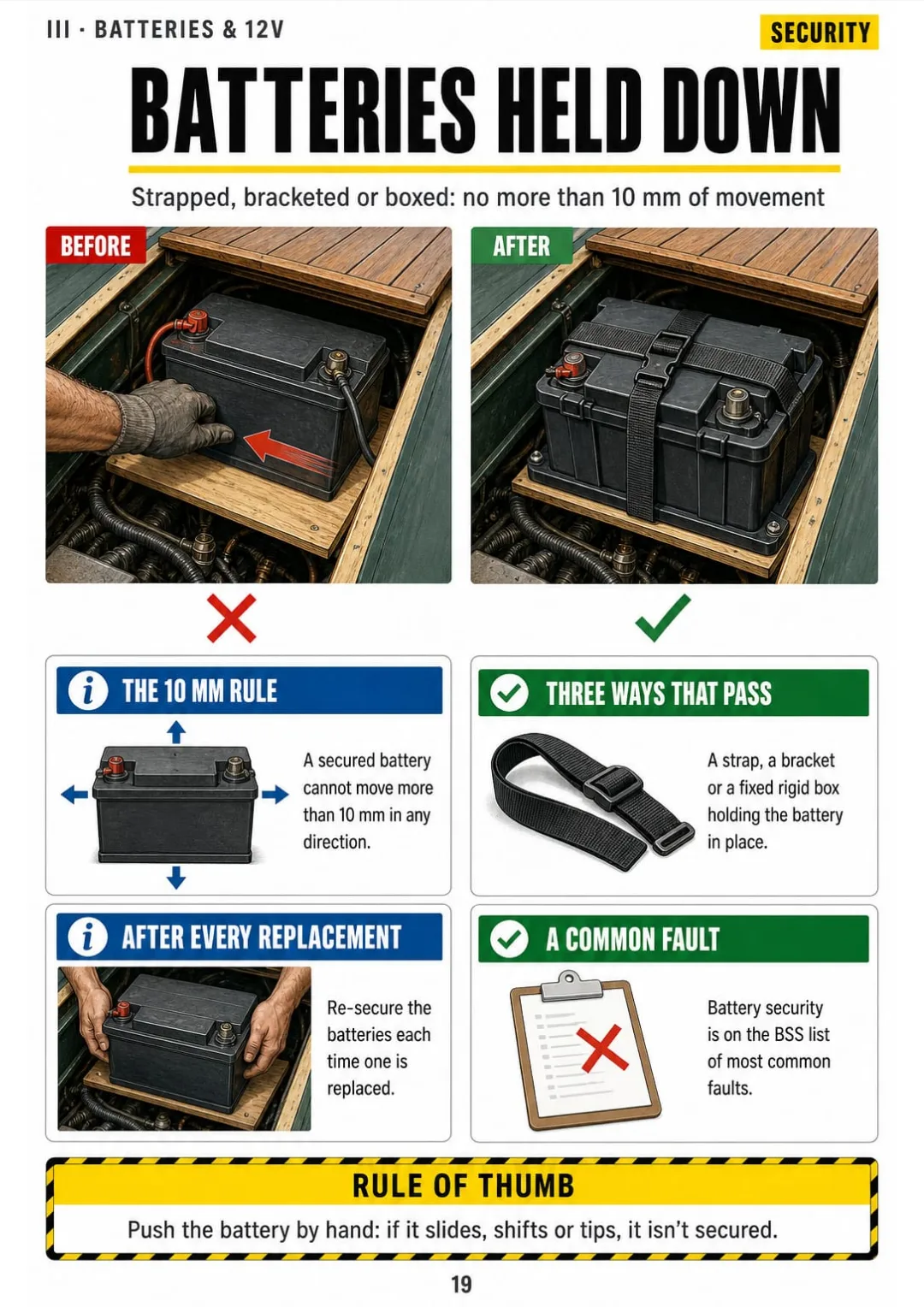
Batteries must not move more than 10 mm in any direction: strap, bracket or rigid box.
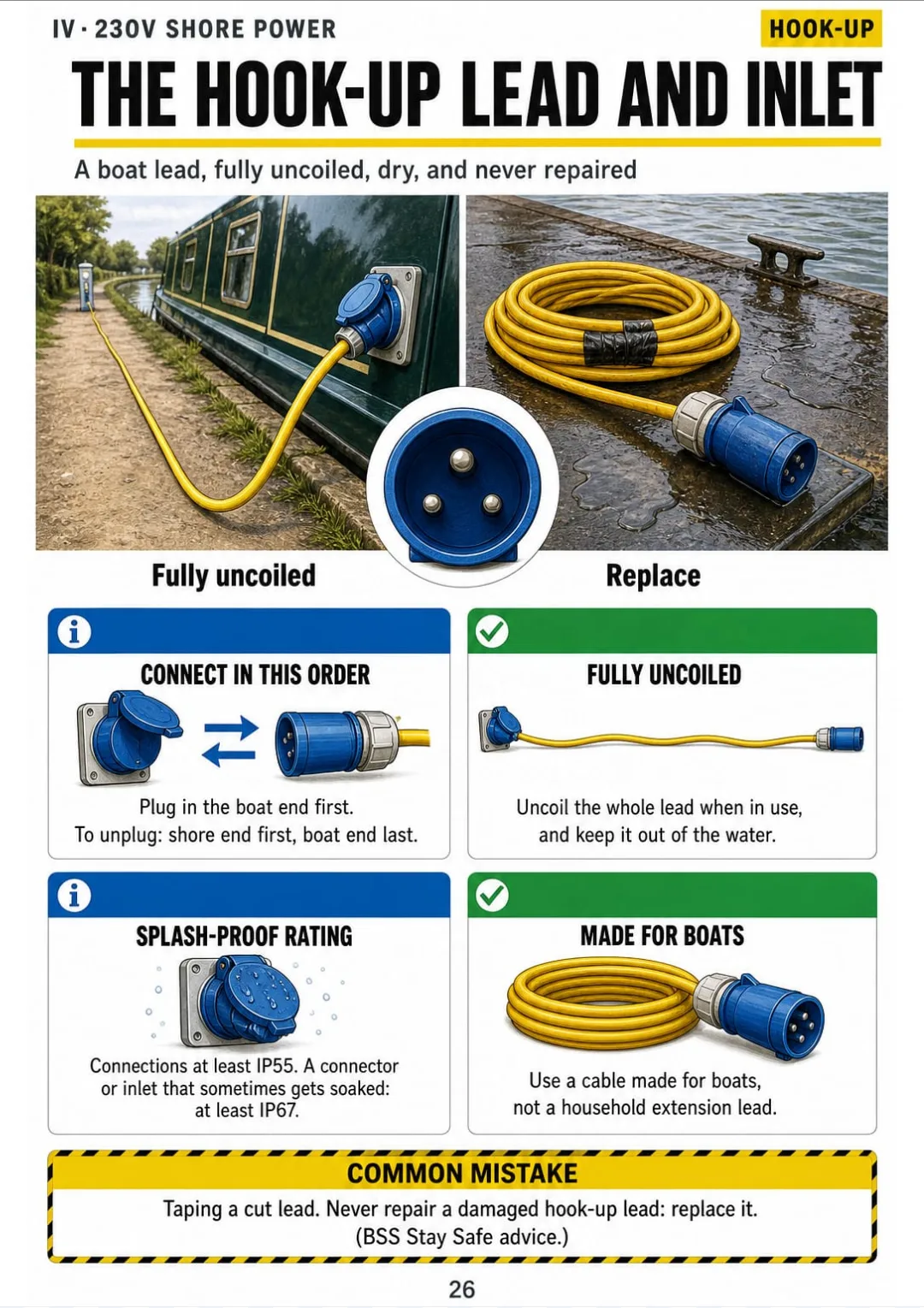
Boat end first, shore end out first; IP55 minimum, IP67 if it gets soaked.
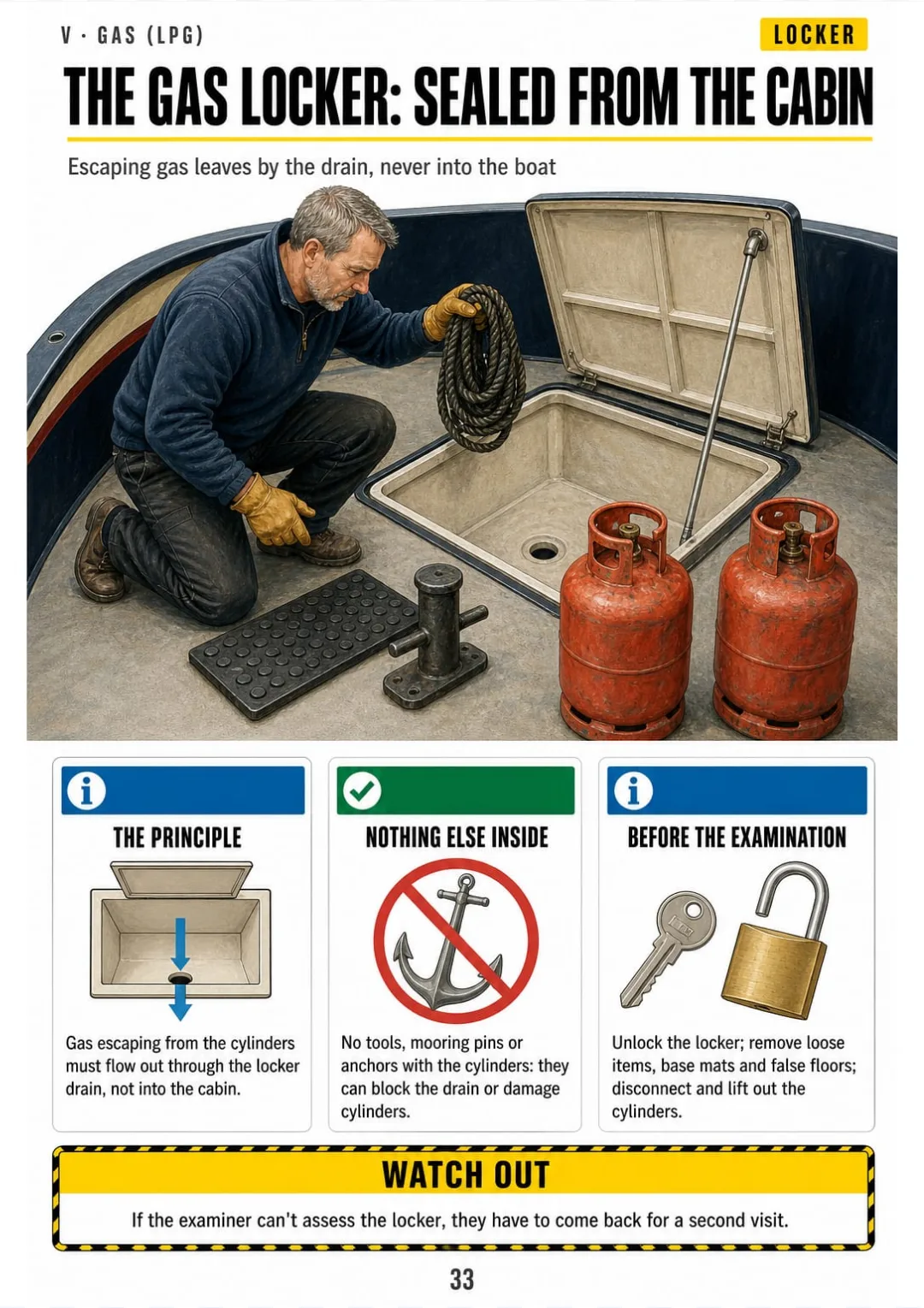
Gas locker: only cylinders inside, emptied and unlocked for the examination.
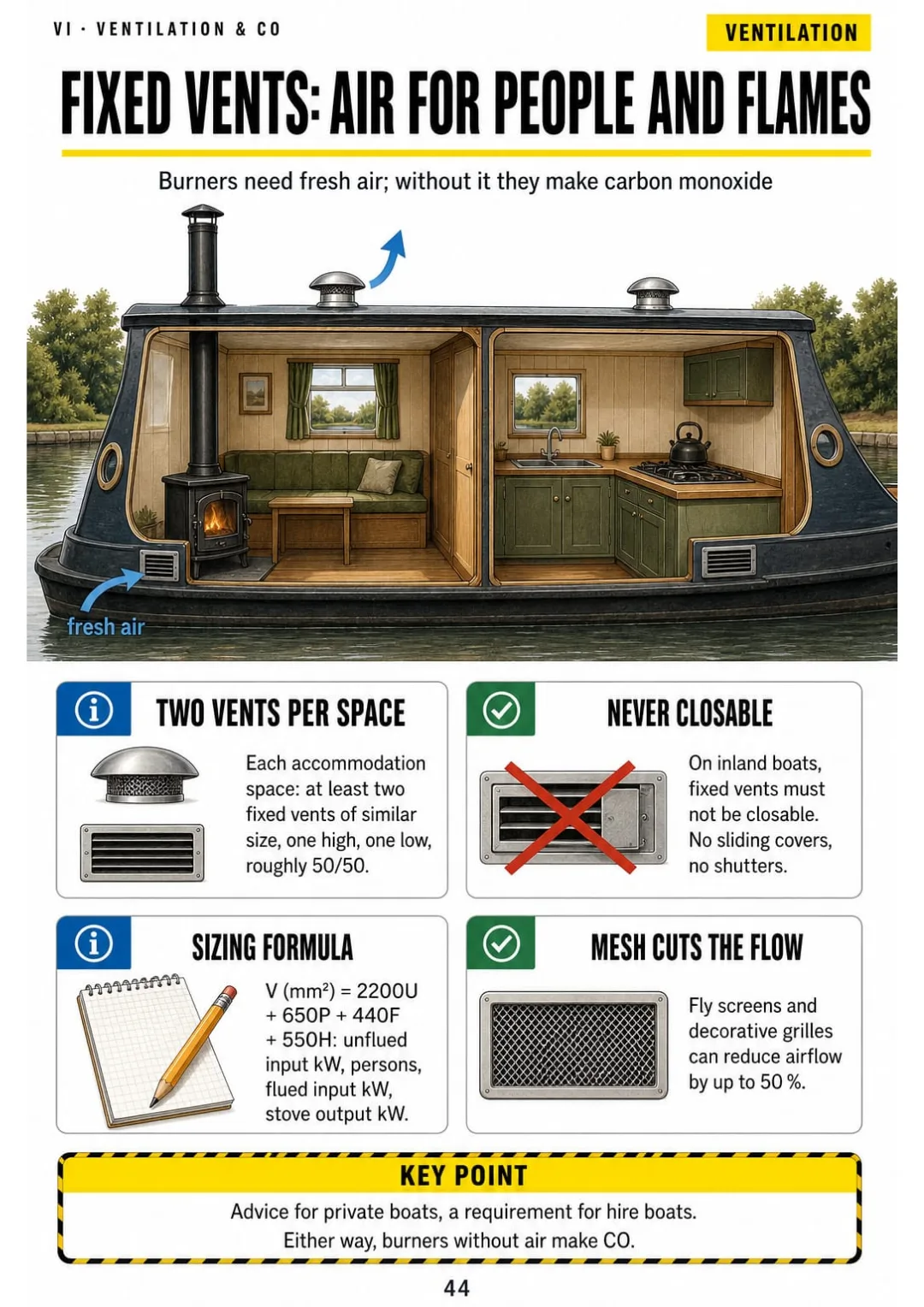
Two fixed vents per space, high and low, split about 50/50, never closable
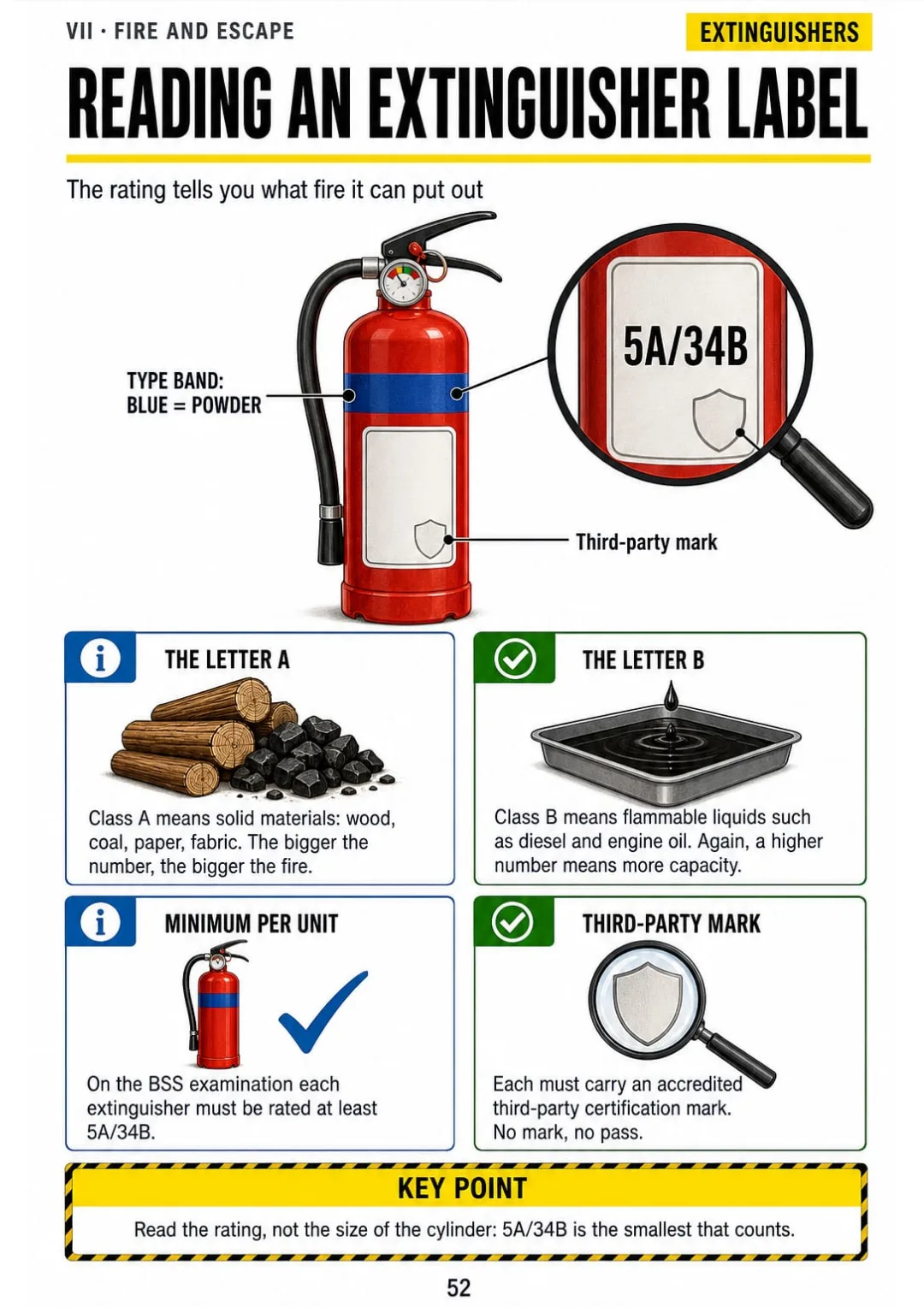
5A/34B: A for solids, B for liquids like diesel, plus a certification mark.
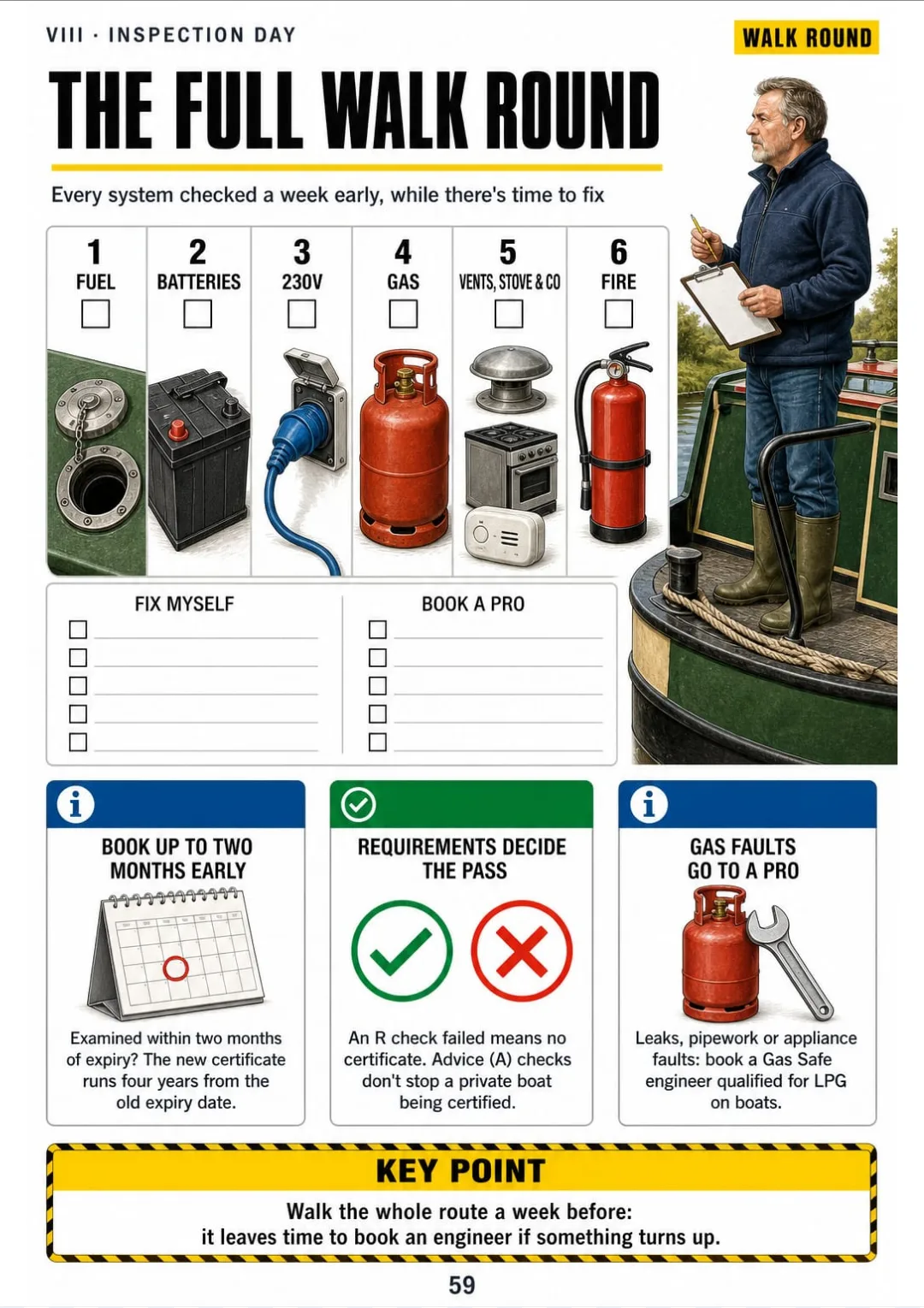
Six systems, one tick box each: fix it yourself or book a pro, a week ahead

Swipe to see more →

These are real pages from the book. The table of contents is the full one: 8 parts and 60 topics.

The Problem Isn't You. It's How It Was Explained to You.

You're in the engine bay with a torch, looking at the batteries, and you can't tell whether the way they're held would pass.

The guidance covers it in paragraphs: secured, protected, accessible. Nobody shows you what "secured" actually looks like on a real boat.

Batteries must not move more than 10 mm in any direction: strap, bracket or rigid box.

In the book, the same batteries are a drawing: the strap, the bracket, the rigid box, and an arrow marking no more than 10 mm of movement in any direction.

The same goes for the fuel filler, the gas locker drain, the hook-up lead, the fixed vents and the extinguisher label: each one has its own page.

You look, you get it, and you sort it out without going back to the guide.

COMPARE FOR YOURSELF

Same Topic, Two Ways to Learn It

THIS
  • The guide: line after line
  • Fuel fillers described only in words
  • You go into the safety check still unsure
The fuel filling point should be positioned so that any overflow or spillage drains outboard and cannot reach the interior of the vessel, the engine space or the bilge. The filler should be fitted with a cap capable of forming an effective seal and should carry a permanent, legible marking identifying the fuel type, using a recognised designation such as 'DIESEL', 'Gas oil' or 'DERV'. A generic marking such as 'Fuel' is not regarded as sufficient identification, and markings that have worn or faded should be renewed.
FOR THIS
  • The fuel filler in one drawing
  • The accepted markings in a box
  • You see it and you get it
'DIESEL', 'Gas oil' or 'DERV' on the filler: 'Fuel' alone isn't accepted.
CONTENTS

Take a Look at the 8 Parts and 60 Topics

64 illustrated pages in 8 parts: before the examiner comes, fuel, batteries and 12V, 230V shore power, gas, ventilation and CO, fire and escape, and inspection day

IBefore the Examiner Comes · pp. 5-10
  1. What the safety examination is for
  2. Requirements vs advice: what fails and what doesn't
  3. The bow-to-stern route, always in the same order
  4. What you check by eye, what a pro must do
  5. The walk-round kit
  6. How to read a page of this book
IIFuel System and Pollution · pp. 11-18
  1. The fuel filler: outside, sealed, labelled
  2. The tank vent
  3. Tank secured and leak-free
  4. The fuel shut-off valve
  5. Flexible fuel hoses: the marking that matters
  6. Fuel pipes and clips along the route
  7. Bilge and drip tray: no oil, no diesel
  8. Petrol on a diesel boat: generator and outboard
IIIBatteries and 12V · pp. 19-25
  1. Batteries held down
  2. Terminals covered
  3. Battery isolator switch
  4. Cables, fuses and chafe
  5. Batteries, gas and hydrogen
  6. Charging sources at a glance
  7. Lithium batteries: what changes
IV230V Shore Power and Inverter · pp. 26-31
  1. The hook-up lead and inlet
  2. The RCD and its test button
  3. Polarity: the reversed-polarity light
  4. Galvanic isolator: protecting the hull
  5. Inverter and 230V wiring on board
  6. Portable generators and exhaust
VGas (LPG) · pp. 32-43
  1. Why gas on a boat behaves differently
  2. The gas locker: sealed from the cabin
  3. The locker drain: clear and overboard
  4. Cylinders upright and secured
  5. Regulator and hose
  6. Gas pipework: copper, supported, sleeved
  7. Isolation valves you can reach
  8. Flame failure devices on hob and oven
  9. Flued appliances: water heater, gas fridge, heater
  10. The tightness test: what the examiner does
  11. If you smell gas
  12. Who can touch the gas system
VIVentilation, Stoves and Carbon Monoxide · pp. 44-51
  1. Fixed ventilation: why it's there
  2. Blocked vents in winter
  3. Solid fuel stove: flue and collar
  4. Stove hearth and clearances
  5. Diesel heaters and their exhaust
  6. Carbon monoxide: the silent risk
  7. CO alarms: the rule and the type
  8. Placing and testing CO alarms
VIIFire and Escape · pp. 52-58
  1. Reading an extinguisher label
  2. How many extinguishers for your length
  3. Where the extinguishers go
  4. The gauge and condition check
  5. Fire blanket by the cooker
  6. Escape routes: bow and stern clear
  7. Smoke alarm and your fire plan
VIIIInspection Day and Review · pp. 59-64
  1. The week before: the full walk round
  2. The day before: make it reachable
  3. Faults found most often, by system
  4. If something fails: what happens next
  5. Between examinations: the yearly routine
  6. The one-page boat map

One Page, One Topic, All Clear

Think of it this way:

It's the week before the safety check. You open the gas locker and wonder: is the drain clear, are the cylinders secured, is the hose in date?

In the book you open the locker drain page and see it drawn: the drain hole, the route overboard, leaves blocking it next to how it should look, and a clear line on what's a job for a qualified gas engineer.

Gas locker: only cylinders inside, emptied and unlocked for the examination.

Same with the fuel filler, the battery straps, the hook-up lead, the fixed vents and the CO alarms: each one on its own page.

Narrowboat Safety Checks Illustrated is 8 parts and 60 topics, all drawn, ending with the week-before walk round and a one-page map of your boat.

What you see drawn, you don't have to memorize.

What's Inside Narrowboat Safety Checks Illustrated:

Ipp. 5-10

Before the Examiner Comes

What the safety check is for, requirements vs advice, the bow-to-stern route, what you check by eye and what a pro must do, and the walk-round kit.

IIpp. 11-18

Fuel System and Pollution

The fuel filler and its marking, tank vent, tank fixing, shut-off valve, flexible hoses, pipes and clips, a clean bilge, and petrol for generators and outboards.

IIIpp. 19-25

Batteries and 12V

Batteries held down, covered terminals, the isolator switch, cables and fuses, hydrogen near gas, charging sources and what changes with lithium.

IVpp. 26-31

230V Shore Power and Inverter

The hook-up lead and inlet, the RCD test button, reversed polarity, the galvanic isolator, inverter wiring and portable generators.

Vpp. 32-43

Gas (LPG)

Why LPG behaves differently, the sealed locker and its drain, cylinders, regulator and hose, pipework, isolation valves, flame failure devices, flued appliances and the tightness test. You'll know what you check by eye, what to do if you smell gas and what only a registered gas engineer can touch.

VIpp. 44-51

Ventilation, Stoves and Carbon Monoxide

Fixed vents and why they're there, blocked vents in winter, the stove flue, collar and hearth, diesel heaters, carbon monoxide and where CO alarms go.

VIIpp. 52-58

Fire and Escape

Extinguisher labels, how many for your length, where they go, gauge checks, the fire blanket, clear escape routes, the smoke alarm and your fire plan.

VIIIpp. 59-64

Inspection Day and Review

The week-before walk round, the day before, the faults found most often by system, what happens if something fails, the yearly routine and a one-page boat map.

At the end of the book: A week-before walk round with one tick box per system and a one-page map of your boat.
Plus: 2 Free Books

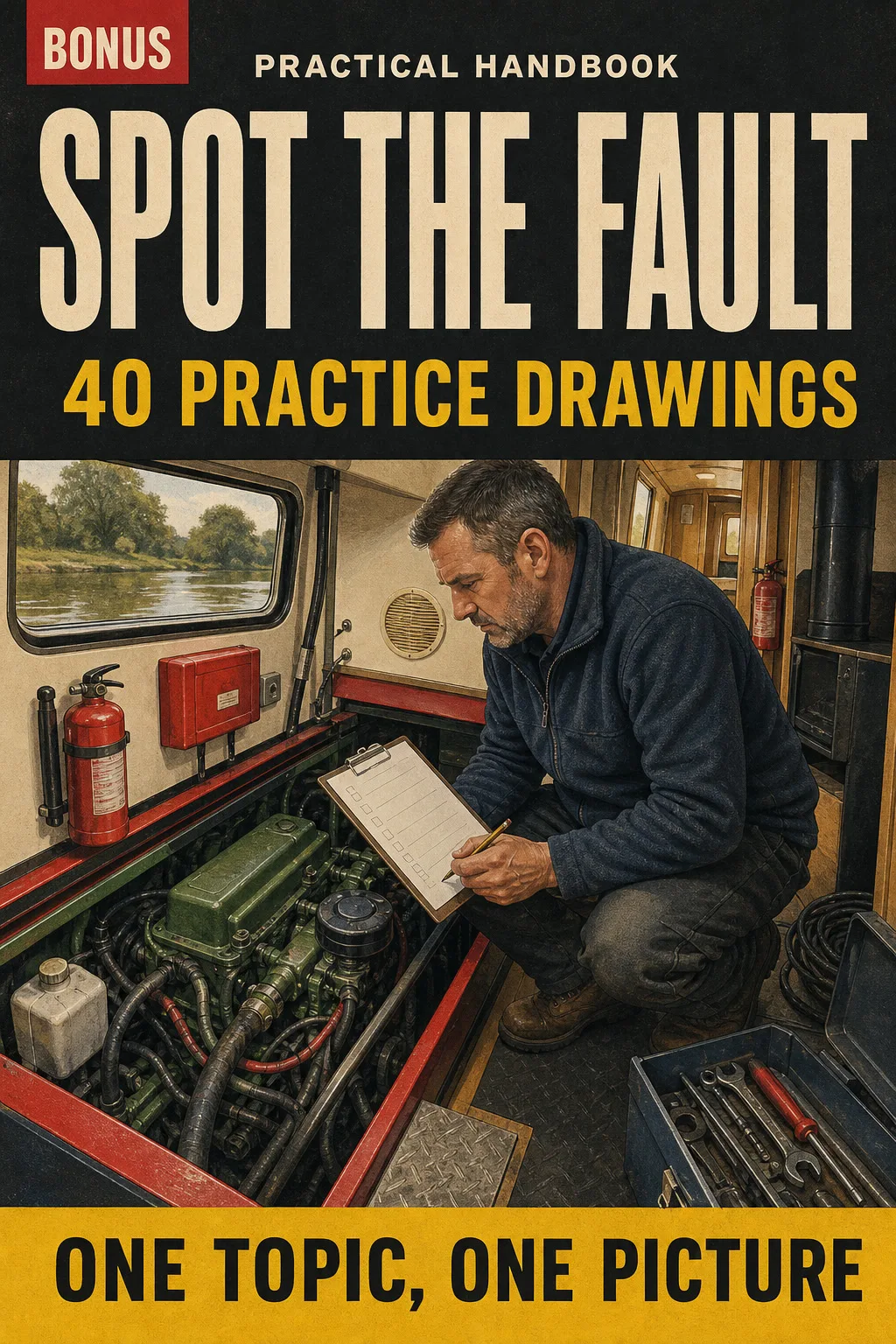
Spot the Fault: 40 Practice Drawings

BONUS 1: «Spot the Fault: 40 Practice Drawings»

Value on its own: US$ 17.90

Train your eye before you go aboard: find the loose hose clip, the blocked vent or the bare battery terminal in each drawing, with the answer on the next page.

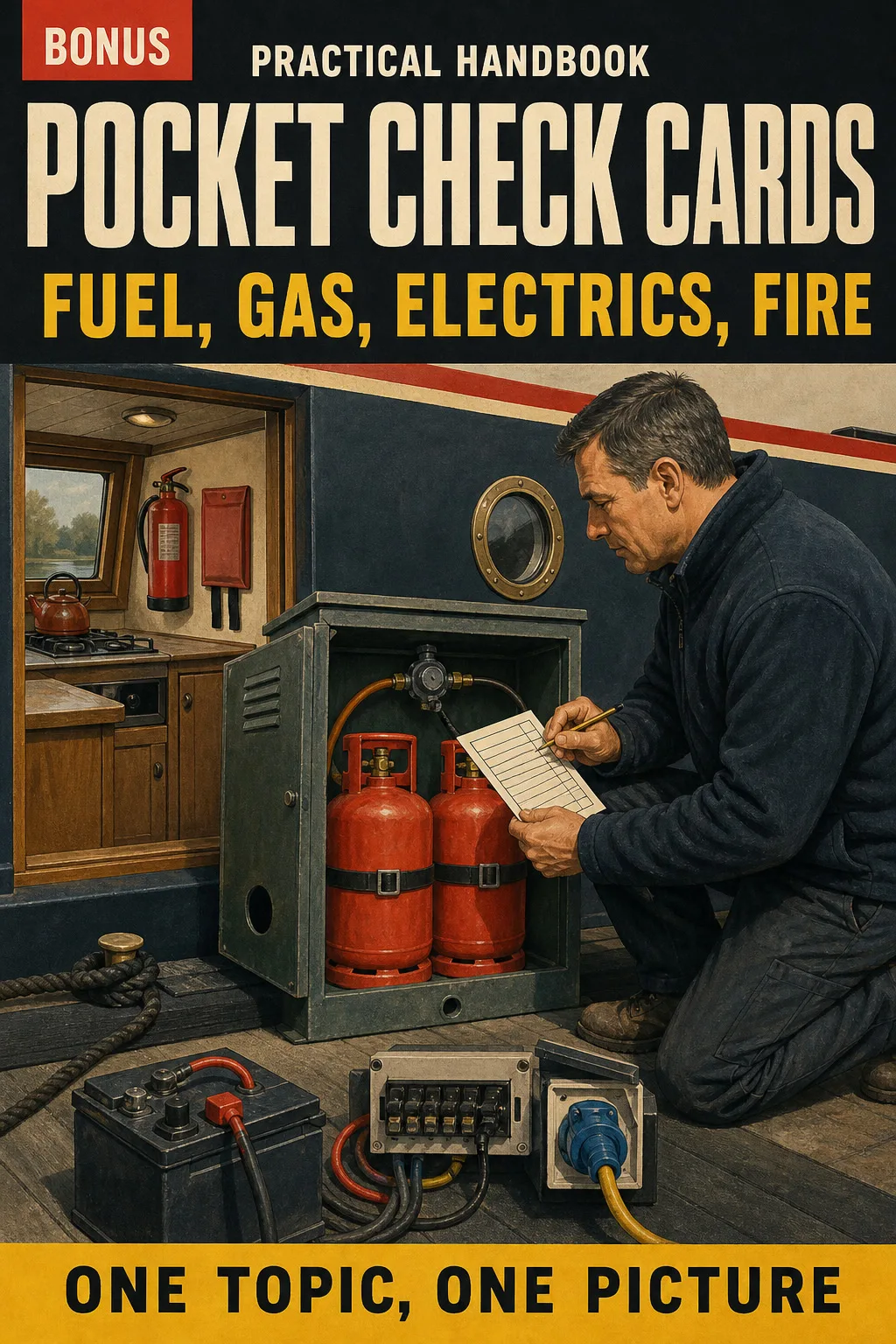
Pocket Check Cards: Fuel, Gas, Electrics, Fire

BONUS 2: «Pocket Check Cards: Fuel, Gas, Electrics, Fire»

Value on its own: US$ 14.90

One printable card per system with the checks in the same bow-to-stern order, to keep in the engine bay and tick off on the day.

Narrowboat Safety Checks Illustrated with 2 Free Books

  • Narrowboat Safety Checks Illustrated: 64 illustrated pagesUS$ 63
  • BONUS 1: Spot the Fault: 40 Practice DrawingsUS$ 17.90
  • BONUS 2: Pocket Check Cards: Fuel, Gas, Electrics, FireUS$ 14.90
  • High-resolution PDF to printIncluded
Total value US$ 95.80
YOUR PRICE:
US$ 27
You save US$ 68.80
YES, I WANT NARROWBOAT SAFETY CHECKS ILLUSTRATED FOR US$ 27

📄 This is a digital PDF book sent to your email: nothing is printed or shipped.

Secure purchaseEncrypted payment30-day guarantee

PDF by email: We email you Narrowboat Safety Checks Illustrated as a PDF, together with the two free books. It's a single payment: no installments, no extra charges.

Who This Book Is For

You've just bought your first boat

You've just bought your first boat

You don't know what the previous owner checked. The book walks you bow to stern and shows what each thing should look like.

Your safety check is coming up

Your safety check is coming up

One route through six systems: you fix what you can yourself and know exactly what to book a qualified engineer for.

You live aboard all year

You live aboard all year

Stove, flue, vents and CO alarms each have their own page, so the winter routine is clear and quick to repeat.

Everything You Get Today

US$ 95.80US$ 27
YES, I WANT NARROWBOAT SAFETY CHECKS ILLUSTRATED FOR US$ 27

📄 This is a digital PDF book sent to your email: nothing is printed or shipped.

30DAYS
GUARANTEE

30-Day Guarantee

Try Narrowboat Safety Checks Illustrated for 30 days, bonus books included.

We refund everything if the file won't open, if the book isn't what you see here, if you were charged twice or if the email doesn't arrive. Just email us.

You pay once. No subscriptions.

Frequently Asked Questions

Is it for me if I have a diesel narrowboat with a solid fuel stove?

Yes. It's written for narrowboats: diesel fuel systems, stoves, flues and vents all have their own pages, plus petrol generators and lithium batteries. You don't need to be technical: every page starts with the drawing. If you've been boating for years, use it as your walk-round order.

Is it up to date, or based on old rules?

It's based on the Boat Safety Scheme requirements and checking procedures currently published, including newer topics like CO alarms and lithium batteries. Every figure and interval is checked against that edition, and the book never copies their text or tables.

Is it official material?

No. It's an independent illustrated book, not affiliated with or endorsed by the Boat Safety Scheme, Canal & River Trust or the Environment Agency.

Does it replace the safety examination or a qualified engineer?

No. It shows you what to look at by eye before the examination. It isn't a certificate and it can't promise a pass. Gas and 230V work is always a job for a qualified engineer, and every page says so.

Are the Spot the Fault drawings the ones the examiner uses?

No. They're drawn for this book, to train your eye before you go aboard.

When and how does it arrive?

As a PDF by email, to the address you enter at checkout.

Do I have to pay every month?

No. It's a one-off payment.

Can I have it on paper?

Yes: print it at home or at a print shop. The check cards are made to print and keep in the engine bay.

How does the refund work?

You have 30 days. We refund everything if the file won't open, if the book isn't what you see on this page, if you were charged twice or if the email doesn't arrive: just email us.

Before You Close This Page

No more reading paragraphs and still not knowing if it's right.

The gas locker drain, drawn and clear.

You reach the safety check knowing where everything is.

Drawings make studying faster.

The book is right below.

One-time payment: US$ 27 · Guarantee: 30 days · PDF by email

YES, I WANT NARROWBOAT SAFETY CHECKS ILLUSTRATED FOR US$ 27

📄 This is a digital PDF book sent to your email: nothing is printed or shipped.